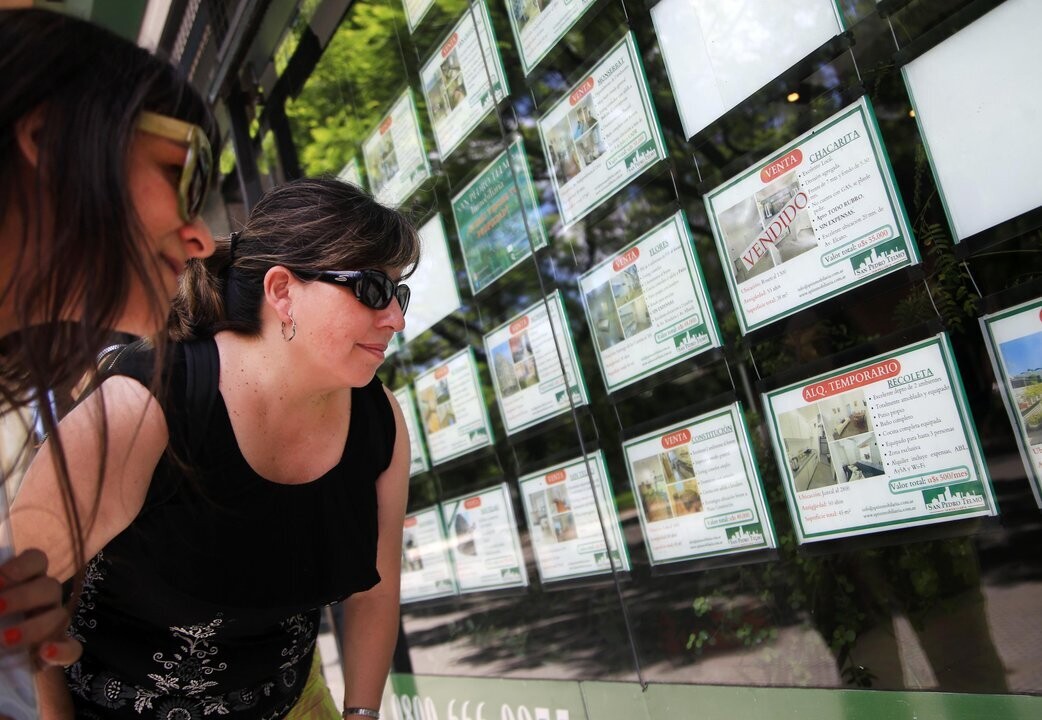
Since the dollar fever subsided following the election result, the carry trade, where investors sell dollars and place pesos in interest-bearing accounts, has yielded a dollar return of 16% in three months. However, it is a dangerous game for novices, much like investing in sovereign bonds in a context where stock markets are volatile and ADRs and Cedears are on a rollercoaster. Savers with capital who want to maximize it do not feel secure in this turmoil of financial assets and are attentive to other, less stressful alternatives. If the goal is to have liquidity on hand, they turn to investment funds that combine various assets and are prone to be reviewed every 6 months to decide their fate, noted Noticias Argentinas agency. The real estate rental market appears as an opportunity to take refuge in bricks and extract a moderate profit, without generally being subject to shocks or long-term risks of loss for those who want to divest from this durable goods investment. If one consults the survey conducted by the General Directorate of Statistics and Censuses of CABA —with data from the Argenprop portal— and compares it with the price stabilization of late 2025 and early 2026, the average value of the square meter for used apartments around USD 2,450 reflects a year-on-year increase of about 5-6%. The difference is very marked according to the areas: premium areas like Puerto Madero, Palermo, and Núñez exceed USD 3,000, while the southern part of the city remains below 800/m². Necessary capital. Therefore, to access a studio apartment in the City of Buenos Aires and rent it out, according to the values published on zonaprop, between USD 50,000 and 200,000 are needed, and within that range, the monthly rent can range from $300,000 to $550,000, according to the official survey. A studio apartment (average 30 m²) can be rented for $484,985 per month, with a year-on-year increase of 34.1%, with the particularity that the northern corridor of the City continues to concentrate the most exclusive options in the real estate market. According to the report, at the end of 2025, a strong predominance of small units was observed: three-quarters of the correspond to 1 and 2-bedroom homes, while larger apartments (4 and 5 bedrooms) represent only 5% of the offer. Regarding the currency, globally 3 out of 4 available ads in the City are published in pesos (75.2%). Dollarization of rents. However, although it is the majority option, the study warns that the dollarization of rentals accounts for almost 25% of the market, marking one of the highest records in the last five quarters. If one invests USD 150,000 in a studio in a zone in the middle of the target range and charges a rent of $500,000 (equivalent to 360 dollars today), multiplied by 12 months, it generates an annual rent of almost 3%, which, compared to a normal expectation of 5% annually, would be below. But with an inflation of over 30%, as projected for 2026, which would be a reference for adjusting the rental contract, 2027 would start with a rental value of 650,000 pesos at an exchange rate lagged from internal prices, as an anti-inflationary policy, which would be capitalized in the brick and at the same time, would allow for a kind of real estate carry over, comparing the rent in pesos with the dollarized one. Last year, the average dollar value of a studio rose from 5.4% to 5.5% and 30% more deeds were concluded than the previous year.